

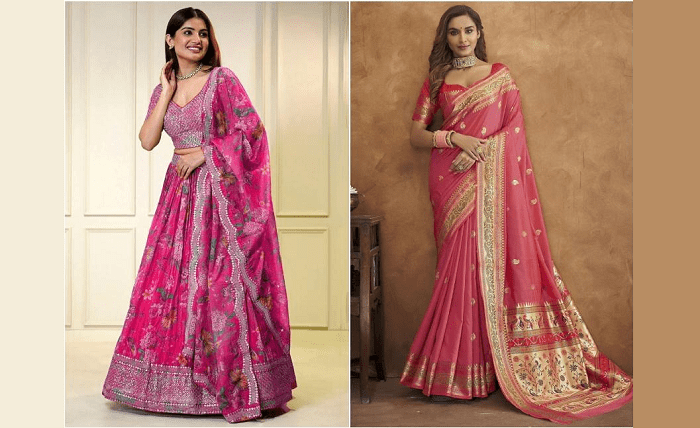
When it comes to traditional Indian outfits, lehengas and sarees are two utmost important outfits. Sarees vs Lehengas both exude elegance, cultural richness and hold rich traditional yet regional history. Both of them have their own unique charm – Whether you are attending a wedding, getting ready for festive celebrations, or simply want to upgrade your ethnic fashion wardrobe, selecting one between them can be delightful yet surprisingly tricky. But they also serve different purposes, suit different body types and different occasions. A saree is the perfect example of grace and sophistication, on the other hand A lehenga offers a playful and regal flair. In this comprehensive blog, we will break down the key differences between lehengas and sarees, and help you in deciding what to wear and when – Stay Tuned
Understanding the Basics – Saree Vs Lehenga
Saree: A saree is a long length and unstitched fabric, generally ranging from 5 to 9 meters. And saree draped stunningly around the body. Any saree comes with a blouse (choli) and a petticoat. The saree’s uniqueness lies in its various draping styles, each style reflects its regional traditions and personal preferences.
Lehenga: A lehenga is a three-piece outfit that features a long skirt (Lehenga), a matching blouse (choli), and an embellished dupatta (scarf). Basically, lehenga choli originated from the Mughal era and have become a popular choice for festive occasions and weddings. These lehengas offer a blend of traditional aesthetics and contemporary flair.
Saree Vs Lehenga – A Breathtaking Design and Structure
Saree:
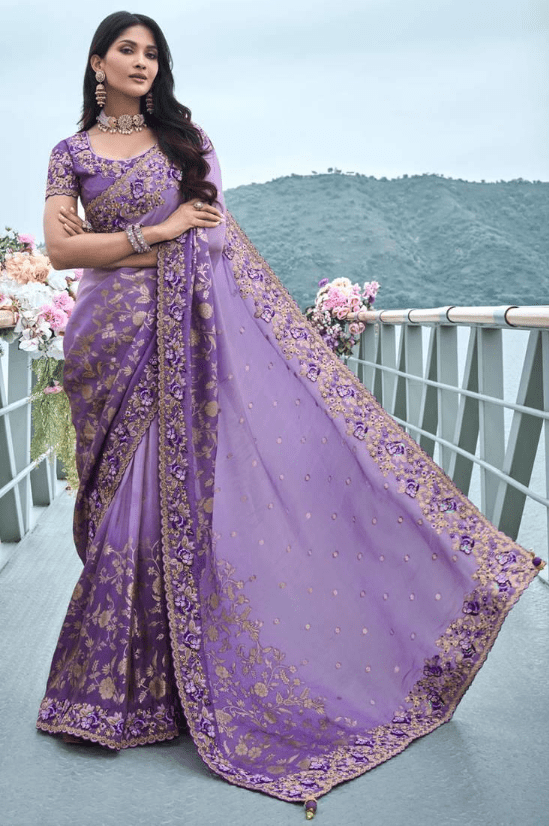
- Fabric & Designs: Usually, Sarees can be available in various types of fabrics like silk, chiffon, georgette, and cotton. Sarees often feature intricate thread embroidery, zari work, and mirror work embellishments that showcase India’s diverse craftsmanship and rich traditional and modern elegance.
- Draping Styles: From the classic Nivi drape to the Gujarati and Bengali styles, the way a saree is draped can exquisitely showcase its appearance, allowing for personalization and regional representation.
Lehenga:
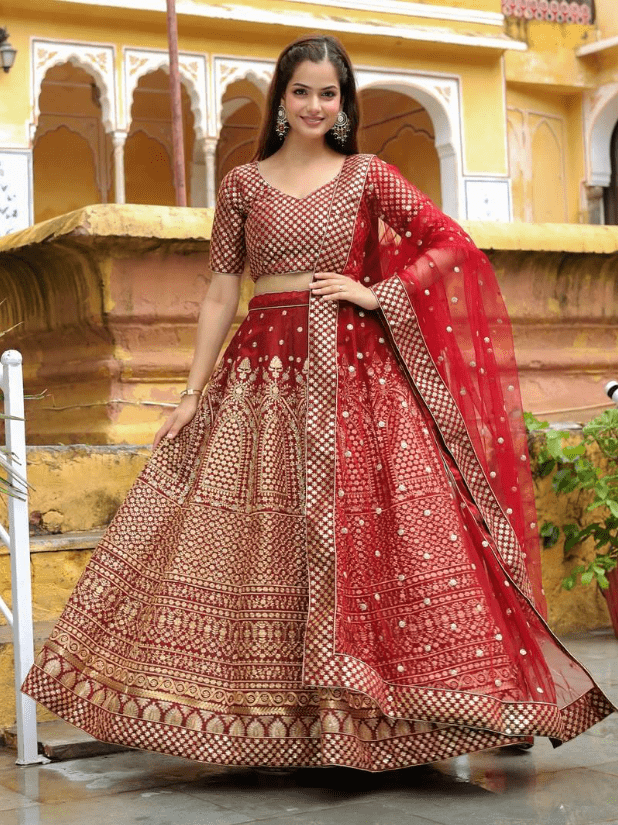
- Silhouette and Cuts: Lehengas come in various design styles such as A-line, flared, fishtail, and circularcuts that suitable different body types and fashion sensibilities.
- Fabric and Embellishments: Lehenga are often crafted from luxurious fabrics like satin, and velvet, lehengas are adorned with intricate embroidery, sequins, beadwork, and other fancy decorative elements that enhance their beauty .
Comfort and Mobility
Saree: While sarees exude grace, they require skillful draping and can be challenging to manage, especially for those unaccustomed to wearing them. However, once properly draped and pinned, sarees allow for comfortable movement and can be worn for extended periods.
Lehenga: Lehengas offer ease of wear, making them a preferred choice for events involving dancing and prolonged activity. The separate components allow for better mobility, and the outfit can be donned without the need for intricate draping.
Suitable Occasions to wear – Saree vs Lehenga
Saree:
- Traditional Ceremonies: Ideal for religious functions, pujas, and traditional weddings, especially when opting for classic weaves like Banarasi or Kanjeevaram sarees.
- Formal Events: Sarees lend a sophisticated and timeless appeal, making them suitable for formal gatherings and cultural events.
Lehenga:
- Festive Celebrations: Perfect for sangeet, mehendi, and reception parties, lehengas offer a vibrant and festive look that aligns with the celebratory mood.
- Destination Weddings: For beach or outdoor weddings, lightweight lehengas in breezy fabrics provide comfort without compromising on style.
Saree Vs Lehenga How to Style Accessorize to Looks like Pro
Saree:
- Jewelry: Pair with traditional jewelry like jhumkas, chandbalis, and layered necklaces.
- Hairstyle: Elegant buns adorned with flowers or hair accessories complement the saree’s grace.
- Footwear: Heels or embellished sandals enhance the overall look.
Lehenga:
- Jewelry: Opt for statement pieces like maang tikka, waist belts, and chokers to accentuate the ensemble.
- Hairstyle: Soft curls or half-up hairstyles add a modern touch.
- Footwear: Traditional juttis or embellished heels complete the outfit.
Tips to Choose the Right Outfit for Various Occasions
When deciding between a lehenga and a saree, consider the following factors:
- Event Type: Traditional ceremonies may call for a saree, while festive celebrations might be better suited for a lehenga.
- Comfort Level: Choose an outfit that you feel comfortable and confident in, especially if the event involves extended wear or dancing.
- Personal Style: Reflect on your personal style preferences—whether you lean towards classic elegance or contemporary chic.
Conclusion
Both lehengas and sarees hold a special place in Indian fashion, each offering unique advantages and aesthetic appeal. Your choice between the two should align with the occasion, your comfort, and personal style. Embrace the richness of Indian attire by selecting the outfit that resonates with you, ensuring you look and feel your best at every celebration.