

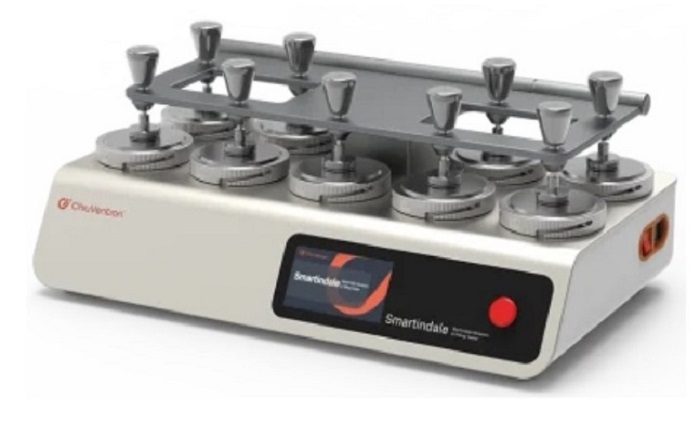
Have you ever wondered why some sofa fabrics look worn out after a year, while others last for decades? Or why your favorite pair of pants develops those annoying little balls of fiber (pills) while others remain smooth? The secret often lies in a critical quality control procedure performed long before the fabric reaches you: the Martindale Abrasion and Pilling Test.
This comprehensive guide will explain what this test is, why it’s the global gold standard for evaluating fabric durability, and how it ensures the quality and longevity of the textiles in your life.
What is the Martindale Abrasion and Pilling Test?
The Martindale Abrasion and Pilling Test is a globally recognized, standardized laboratory method used to simulate and quantify the wear and tear a fabric will experience in real-world use. It measures two key properties:
- Abrasion Resistance: The fabric’s ability to withstand surface wear from rubbing, scuffing, and friction.
- Pilling Resistance: The fabric’s tendency to form small, tangled balls of fiber (pills) on its surface due to friction.
Named after the machine that performs it, the test subjects a fabric sample to controlled, repetitive rubbing motions under a specified pressure. The results provide a numerical rating (often in thousands of cycles) that predicts how the fabric will perform over time.
Why is This Test So Important?
In a world of countless textiles, from luxury upholstery to high-performance workwear, the Martindale test is the universal language of durability. Here’s why it’s indispensable:
- For Manufacturers: It provides objective, reproducible data to select the right materials, ensure batch consistency, and meet international quality standards and buyer specifications.
- For Retailers & Brands: It offers a quantifiable claim to support marketing (“50,000 rubs for heavy domestic use”) and reduces returns due to premature fabric failure.
- For Specifiers (Architects, Interior Designers): It is crucial for choosing appropriate fabrics for specific applications—a hotel lobby sofa requires a far higher abrasion rating than a residential bedroom curtain.
- For Consumers: Ultimately, it ensures you get a product that lives up to its promise, providing value for money and long-term satisfaction.
How Does the Martindale Tester Work? A Step-by-Step Look
The principle is elegant in its simulation of real-life wear. Here’s a breakdown of the process:
- Sample Preparation:Circular fabric specimens are cut and mounted into special holders. One is the “upper specimen” (which moves), and the other is the “lower specimen” (backed by a standard abrasive material like foam or worsted wool).
- The Test Motion:The machine moves the upper specimen in a precise, predetermined Lissajous figure (a sliding, elliptical motion) against the lower specimen. This multi-directional motion accurately simulates the complex friction of everyday use, such as someone sitting and moving on a chair.
- Applied Pressure:A known weight is applied to the specimens, creating a consistent and standardized pressure (typically 9 kPa or 12 kPa for upholstery).
- The Assessment:
* For Abrasion:Testing continues at set intervals until a predefined endpoint is reached. This endpoint could be thread break(two or more threads worn through) or a noticeable change in appearance (color loss, texture change). The number of cycles endured is the fabric’s Martindale Abrasion Rating.
* For Pilling: The test is run for a fixed number of cycles (e.g., 1,000 to 18,000). The sample is then compared to a set of standard reference images (ratings 1-5, where 5 is no pilling and 1 is severe pilling) to assign a pilling grade.
Understanding Martindale Ratings: What Do the Numbers Mean?
The magic number—the Martindale rub count—is your key to understanding intended use. Here is a general guideline for fabric applications:
- < 10,000 cycles: Light duty decoratives (e.g., cushions, throws).
- 10,000 – 15,000 cycles: General domestic upholstery for light use (e.g., occasional chairs, headboards).
- 15,000 – 25,000 cycles: General domestic upholstery for daily use (e.g., family living room sofas, dining chairs).
- 25,000 – 30,000+ cycles: Heavy duty domestic/commercial use (e.g., high-traffic home areas, waiting rooms, small offices).
- > 40,000 cycles: Severe duty commercial/contract use (e.g., hotels, airports, hospitals, casinos).
Important Note: These are general categories. Always refer to the specific warranty or specification guidelines provided by the manufacturer.
Global Standards and Compliance
The Martindale test’s strength is its standardization. Major international standards organizations have detailed protocols, ensuring tests are comparable worldwide. Key standards include:
- ISO 12947: International Standard for abrasion resistance.
- ASTM D4966: American Standard for abrasion resistance.
- ASTM D4970: American Standard for pilling resistance.
- GB/T 21196: Chinese National Standard.
Using a certified tester that complies with these standards is non-negotiable for reliable results.
Choosing the Right Tester for Your Lab
For quality control managers, textile engineers, and R&D professionals, selecting the right instrument is critical. A top-tier tester, like the Chiuvention Martindale Abrasion and Pilling Tester, incorporates features essential for precision and efficiency:
- Multi-Station Design: Allows simultaneous testing of multiple specimens, dramatically increasing lab throughput.
- Precision Counting & Automatic Stop: An electronic counter accurately records cycles and stops automatically at the predetermined endpoint or fabric failure.
- Compliance with International Standards: Built to meet ISO, ASTM, GB, and other major standards for globally accepted results.
- User-Friendly Interface & Robust Construction: Ensures ease of operation, long-term reliability, and minimal maintenance.
- Versatility: Capable of performing both abrasion and pilling tests with appropriate accessories and backing materials.
Beyond Upholstery: Other Applications
While most associated with upholstery, the Martindale test is versatile:
- Apparel: Testing denim, types of workwear, and other durable garments.
- Automotive: Evaluating seat fabrics, headliners, and interior trim.
- Leather & Artificial Leather: Assessing surface finish durability.
- Floor Coverings: Testing the wear layer of carpets and textile floorings.
Conclusion: The Foundation of Fabric Trust
In an industry where aesthetics must be matched by endurance, the Martindale Abrasion and Pilling Test is more than just a procedure—it’s the foundation of trust. It transforms subjective guesswork about fabric quality into objective, actionable data.