

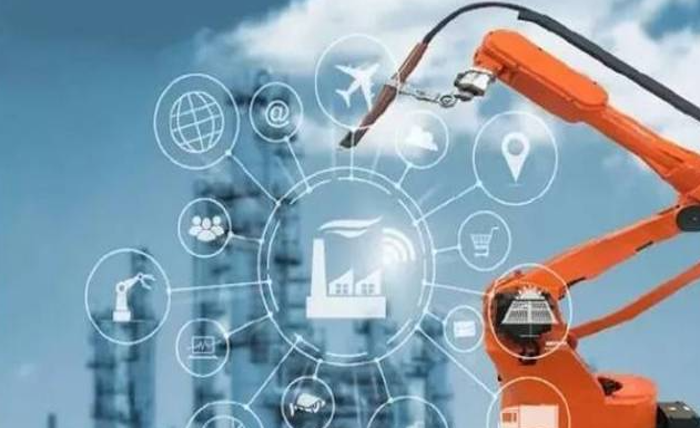
In 2025, the global manufacturing industry is ushering in a transformation wave that emphasizes both digitalization and resilience. Accelerated digital transformation, improved automation, and supply chain restructuring have become the core trends of the industry. Against this backdrop, lifting equipment, once regarded as “traditional tools,” is emerging as a key link connecting production and logistics through technological innovation, providing enterprises with core support to balance efficiency and resilience. From factory workshops to logistics hubs, intelligent lifting solutions are redefining the operational logic of modern manufacturing.
Supply Chain Resilience Needs Under Manufacturing Transformation
In the past few years, factors such as the pandemic and geopolitical fluctuations have made the global manufacturing industry deeply aware that simply pursuing lean “just-in-time production” is no longer sufficient to cope with uncertainties. Resilient planning of “being prepared for emergencies” has become a key corporate strategy. Manufacturers are unwilling to abandon the cost advantages of lean production, while needing to enhance supply chain risk resistance through flexible layout and redundant design. This contradiction is driving the upgrading of production equipment towards the dual core of “efficiency + flexibility.”
The rise of distributed manufacturing models has further intensified this demand. More and more enterprises are locating their production bases close to target markets, and small-scale, modular factories have become a new choice. This requires material handling equipment to not only adapt to compact spaces but also quickly respond to the production needs of multiple batches and small quantities. As the core carrier of material circulation, the performance of lifting equipment directly affects production efficiency, operating costs, and supply chain stability, making it a crucial link that cannot be ignored in the manufacturing transformation.
Core Empowerment Value of Intelligent Lifting Equipment
Modern lifting equipment has broken away from the positioning of “pure lifting tools” and become an important part of the intelligent transformation of the manufacturing industry through technology integration. In automated production scenarios, lifting equipment is deeply integrated with industrial Internet of Things and big data analysis technologies to achieve real-time monitoring of equipment status, fault early warning, and remote maintenance, ensuring continuous and efficient production operations.
To meet the space constraints and flexible needs of distributed manufacturing, portable gantry cranes have demonstrated unique advantages. This type of equipment does not require fixed installation and can be quickly deployed in different workshops or temporary work sites. Its modular design enables it to adapt to different load requirements from 1 ton to 10 tons, perfectly matching the multi-scenario material handling needs of small factories. Whether it is component transfer, equipment assembly, or finished product outbound, efficient operations can be achieved through flexible adjustments, making it an ideal partner for distributed manufacturing models.
In high-precision production scenarios, the reliability of core components directly determines overall efficiency. As a key component of lifting equipment, the DRS wheel blocks system achieves millimeter-level positioning accuracy while ensuring heavy load capacity through laser calibration technology and hardened tread design, effectively reducing equipment idle time and maintenance costs. Its seamless connection with intelligent control systems can feedback operational data in real time, providing support for predictive maintenance and helping enterprises find a balance between “lean” and “resilience.”
Future Trends: Deep Integration of Lifting Equipment and Manufacturing
With the widespread application of 5G and AI technologies in the manufacturing industry, lifting equipment will be further integrated into intelligent production networks. Through linkage with digital twin systems, the operating status of lifting equipment can be simulated and optimized in real time to avoid potential risks in advance; the deepening of green manufacturing concepts will also promote the upgrading of lifting equipment towards energy conservation and low carbonization, reducing carbon footprint through high-efficiency motors and intelligent energy-saving algorithms.
For enterprises, choosing a suitable lifting solution is no longer a simple equipment purchase, but a long-term investment based on their own transformation strategies. Whether it is portable equipment supporting distributed manufacturing or core components ensuring high-precision production, high-quality lifting equipment is helping enterprises build a more resilient operational system. In the wave of manufacturing transformation in 2025, these “intelligent weightlifters” will continue to safeguard the efficient operation of global supply chains.