

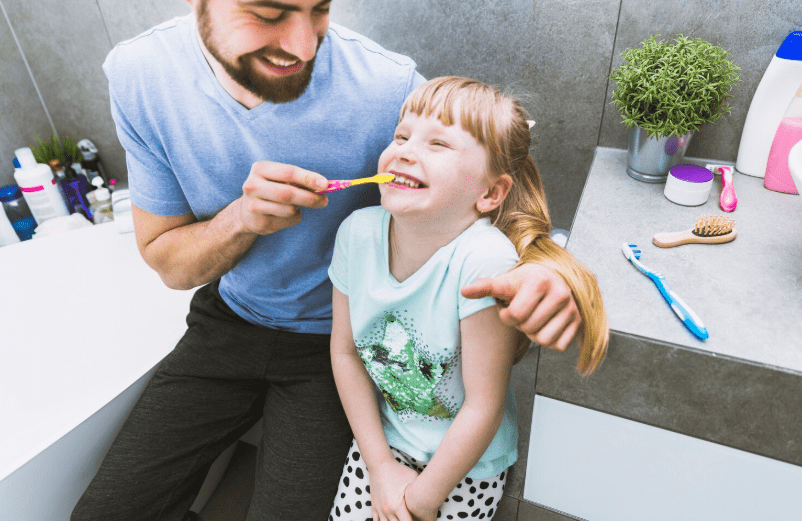
You already know brushing and flossing matter. The hard part is getting your child to care. Many kids see dental hygiene as a boring chore. Some even feel fear or shame about their teeth. That pressure can build fast. This guide helps you turn daily care into a simple game your child can enjoy. You will learn how to use music, stories, and small rewards to change habits. You will see how to handle pushback without yelling. You will also find tips from a Rockton dentist who works with children every day. The goal is not perfect teeth. The goal is steady routines that feel safe. When home care feels safe, dental visits feel easier. Then your child feels proud, not scared. You can start tonight with a toothbrush, a timer, and a calm plan.
Know what your child needs each day
Clear facts help you stay steady. Children need simple steps that repeat every day. You do not need special tools. You need a short list and a clear plan.
| Age | How often to brush | How long to brush | Fluoride toothpaste size
|
|---|---|---|---|
| Under 3 years | 2 times per day | 2 minutes total | Smear the size of a grain of rice |
| 3 to 6 years | 2 times per day | 2 minutes total | Pea sized |
| 7 years and older | 2 times per day | 2 minutes total | Pea sized |
Turn brushing into a short game
Your child will join in when brushing feels like play. The rules stay firm. The mood feels light.
Try these three game ideas.
- Two minute music game. Let your child pick a song that lasts two minutes. Press play. Brush together until the song ends. Change songs each week.
- Tooth counting race. Count teeth out loud as you brush them. Let your child count your teeth too. Keep the pace slow and calm so you still clean each tooth.
- Foam monster story. Tell a short story about foam that chases “sugar bugs” away. Ask your child to “spot” bugs you missed and brush them off.
Games give your child a sense of control. You still guide the steps and the time.
Use rewards that build routine, not pressure
Rewards can help when they are small and steady. You do not need toys or sweets. You need simple signs that you see your child’s effort.
- Use a sticker chart for morning and night brushing.
- Give a high five or short hug after each session.
- Offer a weekly choice, such as a bedtime story or song, when the chart is full.
Try to praise effort. Say what you see. You might say, “You brushed all the way to the back tonight. That took real focus.” Clear praise feels honest and builds trust.
Let your child help plan the routine
Children feel calmer when they help shape the routine. You still set the rules. You allow safe choices inside those rules.
- Let your child pick the color of the toothbrush.
- Offer two toothpaste flavors and let your child choose one.
- Ask your child to choose the order. For example, wash your face first or brush first.
Next, invite your child to help set a written “tooth plan” and tape it by the sink. Use three clear steps. Brush. Spit. Smile in the mirror. Simple steps feel safe.
Handle pushback without a fight
Some nights, your child will say no. That does not mean you failed. It means your child feels tired or upset.
Try this three-step method.
- Stay calm. Take one breath before you speak. Use a low voice.
- Name the feeling. Say “You look tired” or “You seem mad.” Short words lower the heat.
- Repeat the rule. Say “We still brush. Then we read.” Then you follow through.
If your child fights hard, you can offer a small choice. For example, ask “Do you want me to brush first or you first?” instead of “Do you want to brush?” The rule stays firm. The choice gives your child some control.
Use stories and pictures
Stories reach children fast. Pictures help them see what you mean.
- Read picture books that show kids brushing.
- Draw a big tooth on paper and let your child color “germs” on it. Then wipe them away with a damp cloth as you talk about brushing.
- Watch a short tooth brushing video from a children’s program.
Team up with your child’s dentist
A kind dental team can change how your child feels about care. You and the dentist share the same goal. You both want calm visits and steady habits at home.
Before a visit you can
- Tell your child what will happen in plain words.
- Bring a comfort toy or blanket.
- Ask the dentist to show each tool and give it a fun name.
After the visit, you can link home care to that positive time. You might say, “We brush so your next visit feels this easy again.” Consistent messages from home and the clinic help your child trust the routine.
Keep your own stress in check
Your child reads your face. If you feel tense, your child will feel it too. You do not need to act cheerful. You need to stay steady.
- Set a regular brushing time so you are not rushed.
- Keep supplies in one basket so you are not searching.
- Accept that some nights will feel messy. Start fresh the next day.
Steady care beats perfect care. When you stay calm and clear, your child learns that dental hygiene is just another simple part of the day. Over time, those small steps protect your child’s mouth and build quiet pride.